|
By Vennie Chou, Natural Skin Care Teacher Ancient Chinese perfume beads were more valuable than gold. Jewelry made from the perfume beads were worn by all emperors and the wealthy. Due to the high cost of the perfume bead jewelry, the beads were rare. Today, the art, processes and medicinal history of Chinese medicinal beads are almost extinct. Here is a little history of why the perfume beads or He-Sian-Zu are so valuable. More than 2,200 years ago, during the Qin Dynasty (ruled by the first Emperor who built the Great Wall), there were many wars and epidemics. However, people found that in areas where there were wild scented plants growing, fewer people became ill. Since they did not understand the reason why scented plants were so protective, they worshiped these plants during ceremonies and used them to show their gratitude for the gods who had provided these healing plants. During the Han Dynasty (206 BCE), the Silk Road was built as a trade network connecting China with Persia and the West. This trade network facilitated economic and cultural exchanges, which resulted in more precious scented botanicals being brought into China. Also, during this same time period, the Traditional Chinese Medicine framework was firmly established, and the oldest Chinese medical text (Huangdi Neijing) was compiled. In addition, the uses of herbs and other medicinal substances were recorded to set a basis for pharmacology. The development of scented plants and resins in perfume beads were more refined and developed. Later during the Tang Dynasty (618 AD), the golden age of Chinese economy and culture, Buddhism spread quickly. The Silk Road expanded to Southeast Asia. Many of the imported and beautifully scented woods and plants became widespread within Chinese Medicine and with perfume beaded jewelry. The Buddhist monks wore them and held them in their hands when they meditated. Wearing perfume beaded or carrying scented sachets were almost a dressing ritual that lasted for thousands of years. People learned and strongly believed the scented botanicals provided protection and healing for their health. Many of the plants listed in Chinese pharmacology texts were scented plants. For example, Oud, Sandalwood, and roses were widely used in these perfume beads. Their scents have the effect of warming to facilitate circulations and smooth movement of Chi (energy). They also calm the nerves and mind to reduce stress and clear the mind. Chronic stress increases cortisol production and causes multiple health issues. Moving blood and Chi helps stimulate the immune system to combat and to heal damage. Traditional Chinese Medicine promotes and emphasizes health ‘Prevention’. Wearing perfume beads made purely from scented plants, woods, and resins was a way of protection and prevention of illness and stabilizing mental and emotional health. Unfortunately, we are losing this ancestral hand-crafted ‘medicine’ using a composite of pure plants and resins to make a wearable to protect our physical and mental health. What we see in the markets are mostly wooden beads with chemicals or essential oils added to them. Ancient perfume beads were made from the finely ground dust of healing, scented botanicals. The composition of each particular plant chosen was well considered and designed for different weaknesses or illnesses. The ancient, scented perfume beads had a purpose and lasted a very long time.
I wanted to retrieve this ancestral medicinal art/skill back, so I studied the ancient processes and hand-rolled a variety of perfume beads from resins and plants from which I had collected and harvested. I found the process very meditative and meaningful. When I wore the necklace, the release of continuous and gentle scent lasted all day. The heat from my body moved the consistent, healing scents to my face. I invite you to the Ancient Chinese Perfume Beads Master Class where this rare ancestral knowledge will be shared and brought back to life.
0 Comments
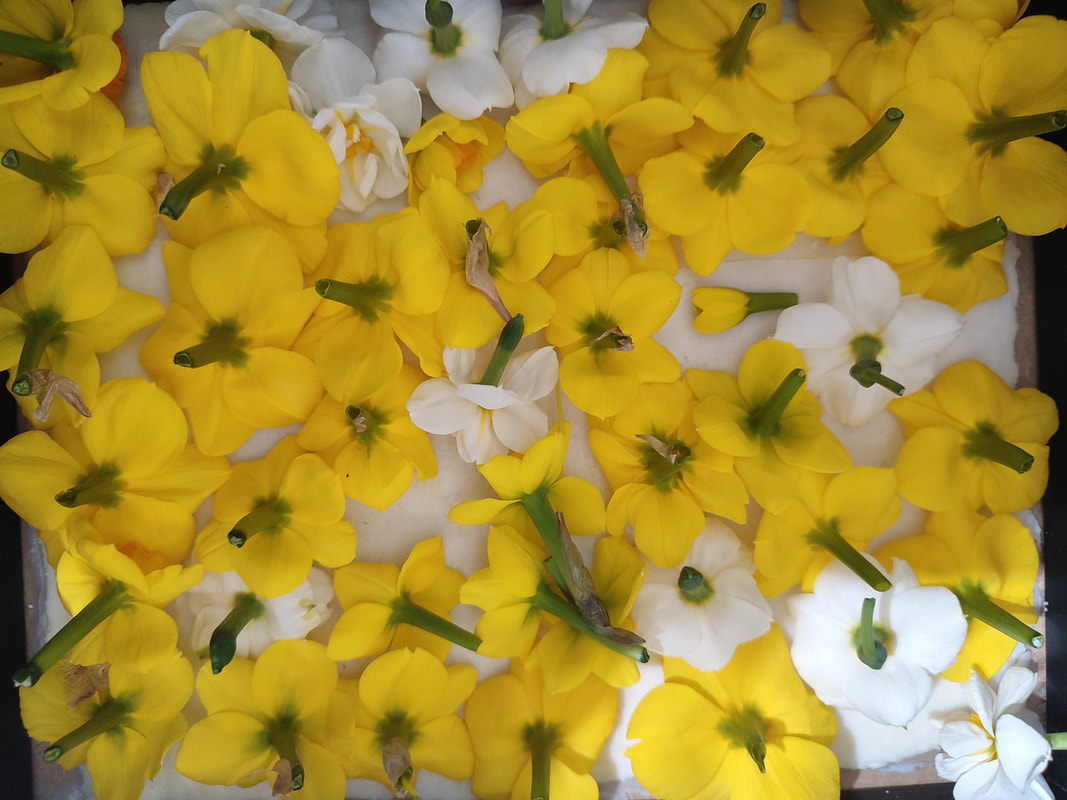
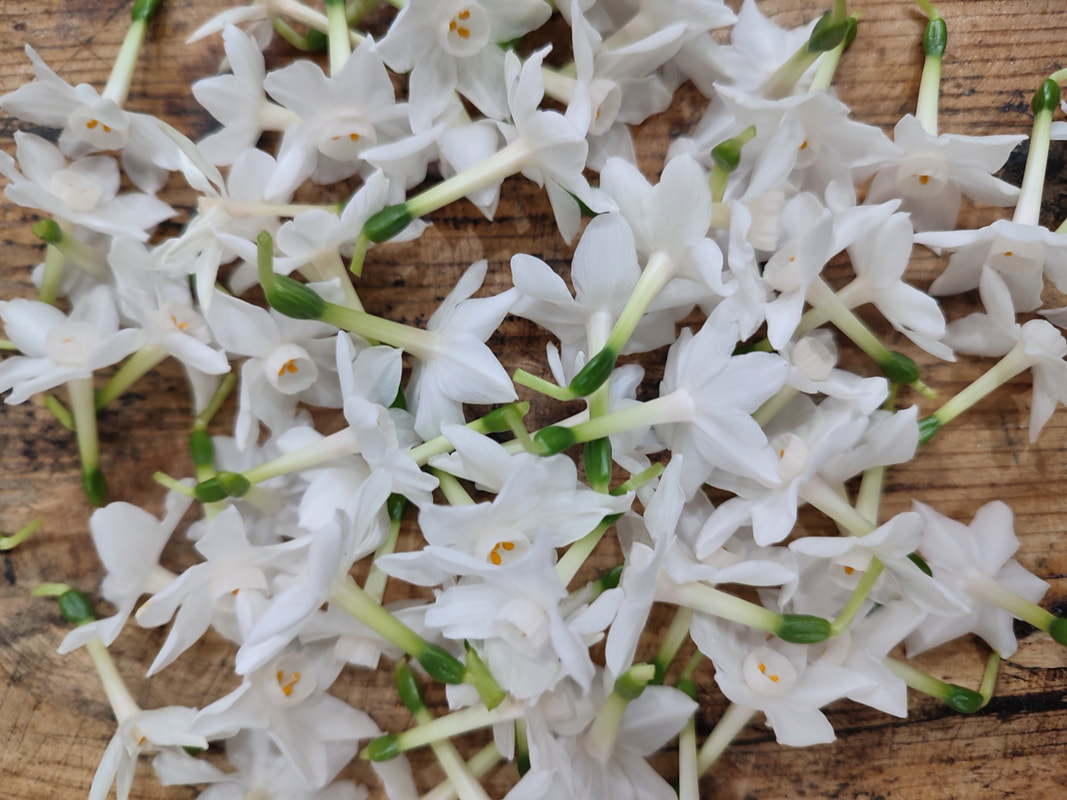
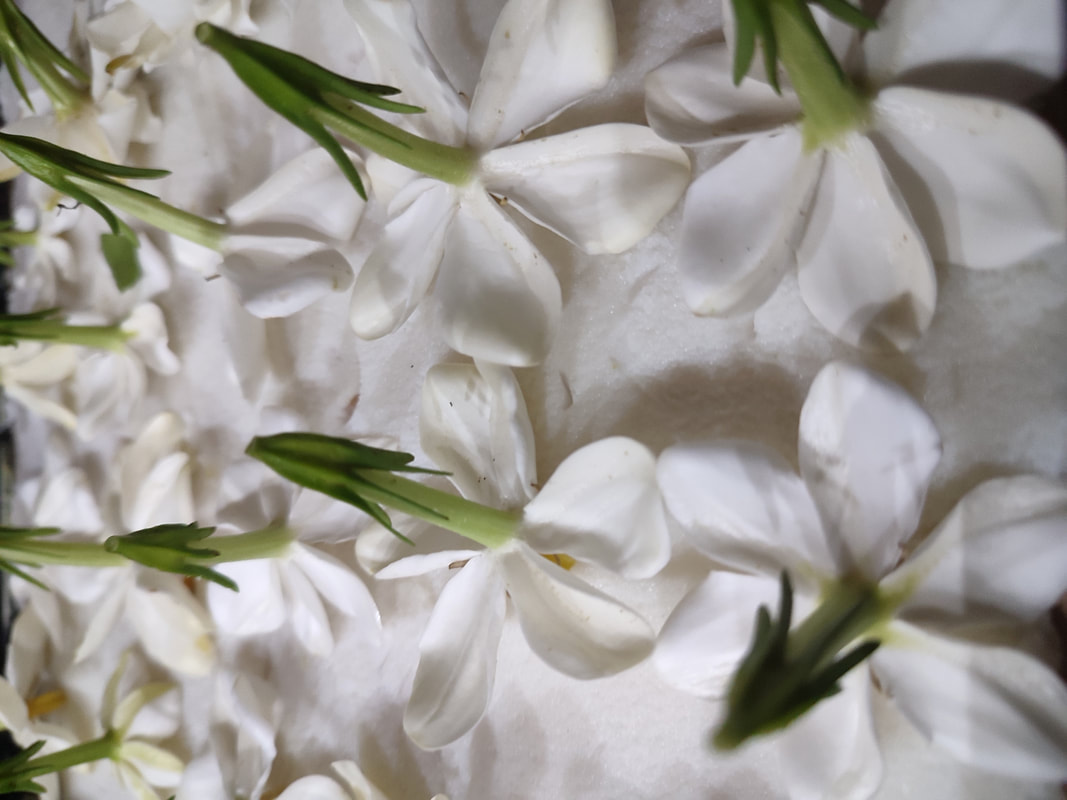
By Andrej Babicky, Certified Natural Perfumer and Raw Material Extraction Methods Expert Unveiling the Ancient Art of Enfleurage: Capturing the Essence of Flowers Natural perfumery it's not just about creating amazing fragrances, but also about growing flowers and extracting essences. One technique that holds a special place in this aromatic world is enfleurage. It's all about capturing the magical essence of a flower to make one-of-a-kind scents. So, let's dive into the enchanting process of enfleurage and get tangled up in the mesmerizing world of scents! It is to the Greeks that we owe the addition of oils scented with flowers to spices, gums and balms. The flowers and plants used for export must be transformed to be preserved. Olive oil, one of the main wealth of Greece, was used as an ointment and as an excipient in the manufacture of perfumed oils. The Greeks practiced enfleurage and very early developed the art of making perfumes. During the mid-1700s. Grasse became a thriving center for industrial production and essence extraction, thanks to the refinement of this technique. However, in today's modern perfume industry, enfleurage is considered more of a historical extraction method. Solvent extractions and the utilization of aromatic molecules have taken precedence. Nonetheless, with the recent resurgence of interest in natural perfumery, some perfumers have embraced enfleurage once again, making slight modifications to the classical procedure and achieving remarkable results. Enfleurage is primarily employed for flowers that contain small quantities of essence or delicate blossoms that could be compromised by other extraction methods. The technique capitalizes on the principle of fat absorption, where the most volatile aromatic molecules are captured by a fat medium upon contact. Various fats, such as lard, ox fat, lamb fat, vegetable oils, mineral oils, and even Vaseline, were traditionally used. Often, a combination of fats was employed, and the specific formula was carefully guarded as an industrial secret, tailored to different flowers and extraction seasons. The unique property of fats to adsorb odorous substances is harnessed when other extraction methods fail to capture the desired scent from flowers or plants. In enfleurage, the flowers are placed in direct contact with the fat, be it in liquid or solid form, until the fat becomes saturated with the perfume. Enfleurage can be performed using either the hot or cold method, depending on the flower and desired outcome. Nowadays, enfleurage is predominantly practiced for illustrative and educational purposes, as it is a labor-intensive and costly process. During cold enfleurage, flowers were placed daily on frames coated with a thick layer of fat. It took approximately 60 days for the fats to absorb the fragrance fully. For instance, 25 kilograms of jasmine flowers were required to perfume one kilogram of fat, while a mere two kilograms of tuberose flowers achieved the same result. This exemplifies the delicate nature of enfleurage and its ability to capture the essence of a flower in minute quantities. Enfleurage holds a special allure for many, as it manages to capture the ethereal essence and aromatic breath of a flower, entwining them in a magical alchemical process. While it may be a time-consuming and demanding technique, it offers a more intimate and personal relationship with the raw materials. For those fortunate enough to have a garden, a balcony, or even just a window, enfleurage can be an enchanting experiment worth undertaking. Through cultivation and extraction, one can discover unexpected and delightful results, forming a deeper connection with nature's fragrant gifts. Enfleurage stands as a testament to the artistry and craftsmanship of perfumery.
It allows us to delve into the essence of flowers, their fleeting beauty and transforming it into olfactory masterpieces. While modern techniques have largely replaced enfleurage in commercial perfume production, its revival among natural perfumers showcases its enduring charm and the endless possibilities it holds. So, why not embark on your own scented adventure and uncover the captivating world of enfleurage following our course of Natural extraction techniques? Discover more about the Natural Raw Material Extraction Methods Enroll in an IPF Certified Perfumery School |
Archives
April 2026
Categories
All
|
RSS Feed